
Because I do research on issues related to higher education, I talk quite a bit with reporters. It is one of my favorite things to do, as it helps connect with policymakers and the general public and also helps to sharpen my research and teaching. But because I get pulled in so many directions and it often takes weeks (if not months) for quotes to be published, I sometimes forget what I say by the time that I read the resulting publication. That’s okay—things normally turn out just fine.Today, I had a new experience. I received a Google alert for a quote that I had in a publication called “Town and Tourist” that I had never heard of. It was the following:
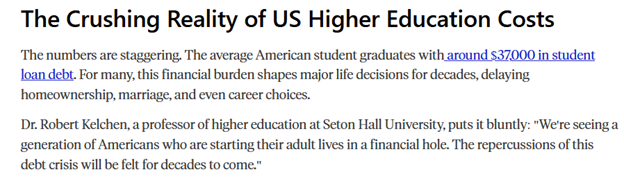
I am used to shady publications that directly copy articles from legitimate news sources immediately after publication (Inside Higher Ed and The New York Times seem to get this a lot), but this one stood out. The first thing that got my attention was the institutional affiliation, as I left Seton Hall for Tennessee three years ago.
The quote also didn’t quite sound like me, as I have written before about how student debt is a nuanced issue instead of being a crisis across the board. I am a blunt person, but I also choose my words carefully.
That led me to search for the quote, as ripping out of another news article would have revealed the initial source. Nothing. That led me to search for the venue and the author. A Google search did not say much about the venue, and the author did not show up at all. I then looked in the Wayback Machine at the website. As the two below screenshots show, a “College & Education” tab showed up in the last week.
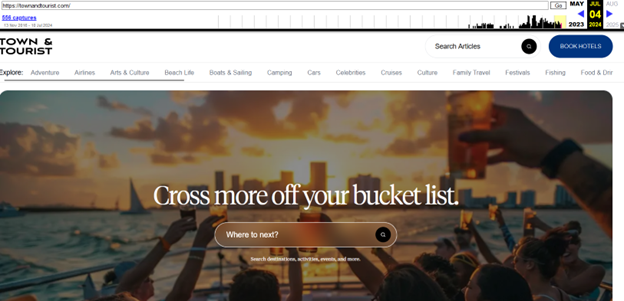
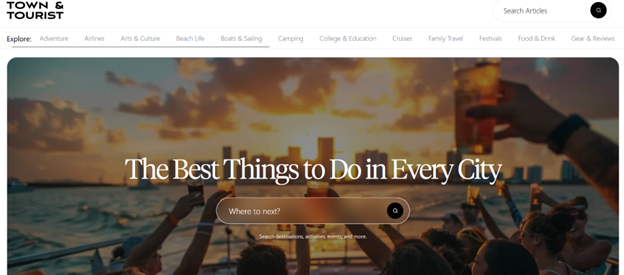
Screenshots of their website last week (top) and today (bottom).
The only article in that tab has my “quote” in it. But I did not say it and the author appears to be made up. She does not show up anywhere else on the Internet and the bio implies that her doctorate is from the Bank Street College of Education—which only grants master’s degrees.
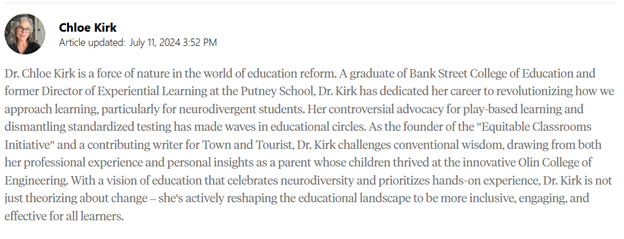
This article is likely AI-written fraud, and there is a lot of this type of garbage floating around the Internet as scammers try to optimize search engine algorithms. This also means that any academic who publishes research or talks with journalists is now at high risk of having quotes made up and attributed to them. So what can we do?
My first recommendation is to set a Google alert for yourself so you are alerted to any time your name shows up. If your name is more common, you may want to also include your organizational affiliation. My experience is that Google alerts do not catch all websites, so get in the habit of searching for your own name on a regular basis—especially if you are a higher-profile individual.
Second, depending on the severity of the issue, it may be worth consulting with your organization’s legal counsel. This obscure website is not a huge deal and they (of course) have no contact information online, but I could see other cases quickly becoming an issue.
Finally, this is likely an example of artificial intelligence making up (“hallucinating”) information. AI can have benefits, but I think that it is appropriate to view it with skepticism due to the ease of misuse.

 Robert Kelchen
Ironically, here’s the platform CEO: https://www.linkedin.com/posts/weareraptive_yesterday-we-launched-the-raptive-report-activity-7212168235847180291-FSjt
Wow, what a hypocrite.
Robert, in terms of AI, this is where Randall Collins says we can be going, a worst-case scenario. Collins, an emeritus professor from Penn, has a storied academic career. Higher Education Inquirer : AI-ROBOT CAPITALISTS WILL DESTROY THE HUMAN ECONOMY (Randall Collins)