
Amid everything going on in the world of higher education right now, it is easy to forget that this is the time of year that students and families are trying to figure out whether they can afford to attend college. This is when I typically get a bunch of questions from journalists across the country about the extent to which college is affordable, and I do my best to provide helpful information.
I have written about student fees at public universities in the past, and the topic is the source of several questions in the last few weeks. In response to that, I updated my work to examine the most up-to-date data available on trends in student fees at public universities that include a look at what has happened since the pandemic. I did this using data on 499 public universities from the 2011-12 through the 2023-24 academic years, excluding about two dozen institutions (including all of Massachusetts) that “reset” fees by shifting most of their fees into tuition at some point during the period. The data for this analysis can be downloaded here.
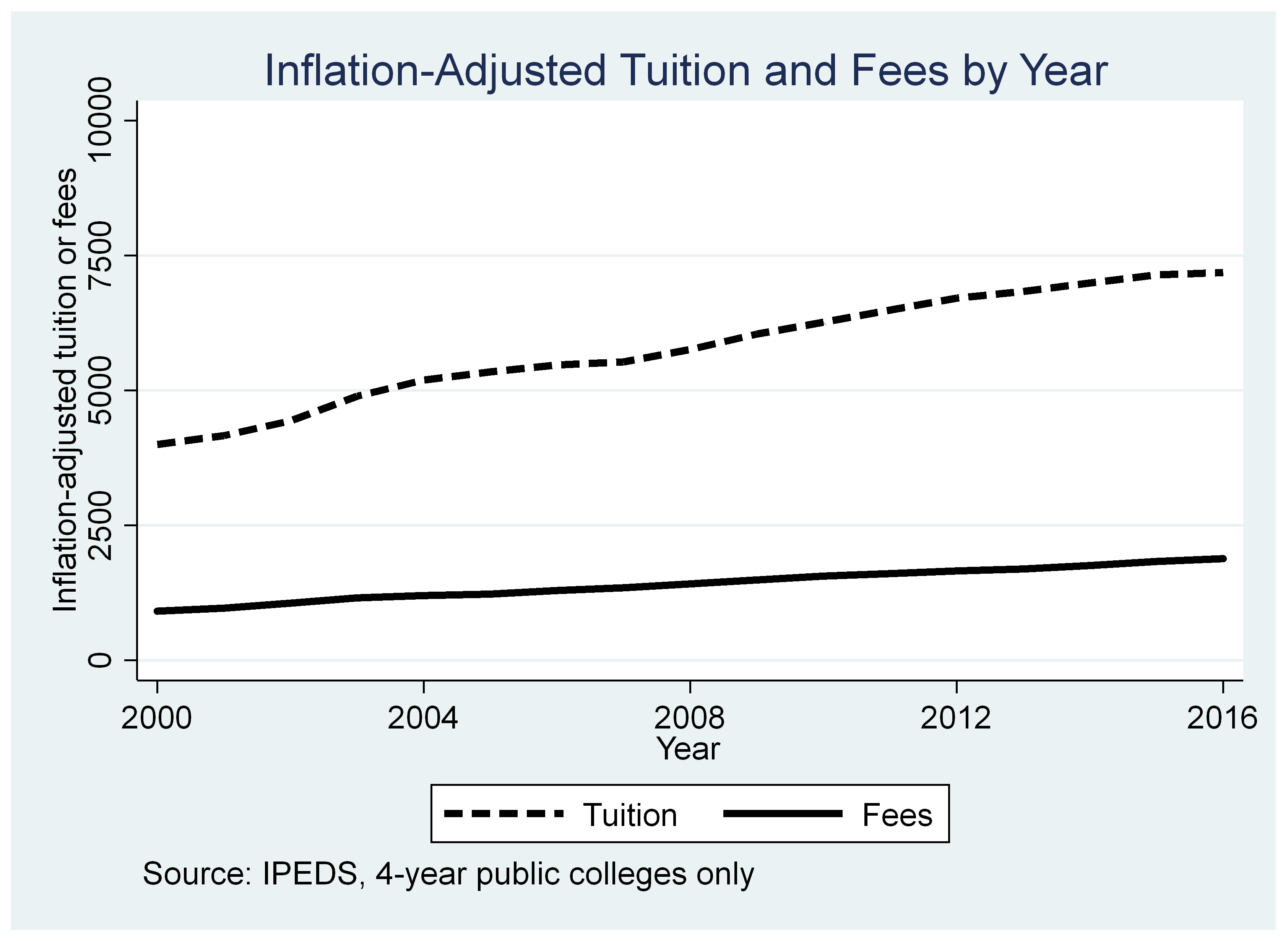
Overall, tuition went up by 37% between fall 2011 and fall 2023, while fees went up by 40%. This is slightly higher than the 35% overall rate of inflation (as measured by the Consumer Price Index) over this same period. It also marks a change from the 2000s, in which fees went up substantially more than tuition. The growth in tuition and fees slowed considerably around the pandemic, which reflects an increase in the number of tuition freezes during the period and difficulties increasing fees while many students were studying remotely.
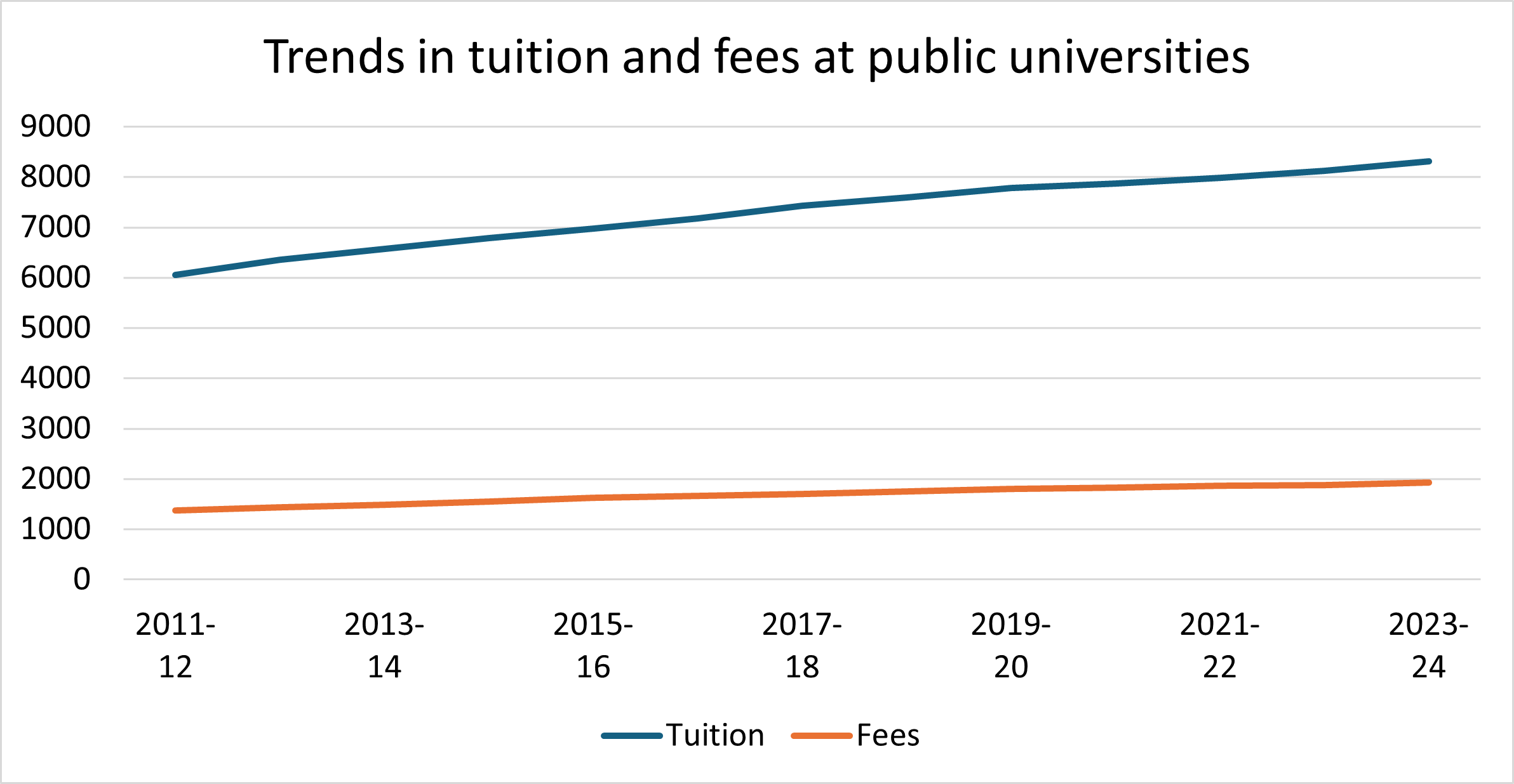

But in fall 2023, fees increased more quickly than tuition. The question is whether that becomes a trend—and whether that will be able to be studied using federal data. It would be possible to continue this analysis by collecting data from institutional websites or fact books, but it would also require a number of assumptions about how to handle the complicated structures of differential tuition by field of study and number of credits taken.

 Robert Kelchen