ACT Scores Fell Last Year. Relax!

As a shareholder of the Green Bay Packers, I keep an eye on what Butte Community College’s most famous student-athlete has to say. Packers quarterback Aaron Rodgers famously told fans in “Packer-land” in 2014 to “R-E-L-A-X” after the team got off to an uncharacteristically slow 1-2 start. Fans relaxed after the team went 11-2 the rest of the way in the regular season as Rodgers played like his regular self.

In the education policy niche of the world, few things get people more upset than declining standardized test scores. Last year, I wrote about the fuss about SAT scores declining—and how at least part of that decline is due to more students taking the test instead of the American education system failing young adults. Now it’s ACT’s turn to release their newest scores—and my message again is R-E-L-A-X.

Between 2015 and 2016, average ACT scores declined from 21.0 to 20.8 nationwide, the lowest score in at least five years. But as the now-dominant test in the United States (much to the surprise of many folks who grew up on a coast where the SAT is still common), the percentage of students taking the ACT rose from 52% in 2012 to 59% in 2015 and 64% this year. This sharp increase in ACT takers is in large part due to more states requiring all students to take the ACT as a graduation requirement. In 2016, all graduating high school seniors took the ACT in 18 states, up from 13 states in 2015.

The five states that required all students to take the ACT for the first time in 2016 all saw large decreases in their average scores, as shown below. Wisconsin, Missouri, and Minnesota all had about 75% of their students taking the ACT in 2015 and had drops of about 1.5-1.7 points when all students took the test, with South Carolina having a drop of 1.9 points as the last 38% of students took the test. Nevada had a decline of 3.3 points in 2016, but the percentage of students taking the ACT more than doubled.

State Pct tested (2016) Avg score (2016) Pct tested (2015) Avg score (2015)
Nevada 100 17.7 40 21.0
South Carolina 100 18.5 62 20.4
Wisconsin 100 20.5 73 22.2
Missouri 100 20.2 77 21.7
Minnesota 100 21.1 78 22.7


Among the other 45 states that had very small changes in ACT participation rates, the average change in scores at the state level (not weighted for size) was effectively zero. So R-E-L-A-X about test score declines when they are due to more students taking the test (some of whom won’t be going to college, anyway) instead of collegegoing students suddenly performing worse.

Income-Driven Repayment Plans Continue to Grow

The traditional way to repay federal student loans was for students to pay back their loans over a ten-year period of time, generally by making the same payment each month. But as student loan debt has generally risen over time (although falling ever so slightly in the most recent quarter), paying off larger loans in a short period of time has become more difficult for many borrowers. This has made income-driven repayment plans, expanded during both the Bush and Obama Administrations, an appealing option for more students (although the future price tag of the programs is something to watch closely in the future).

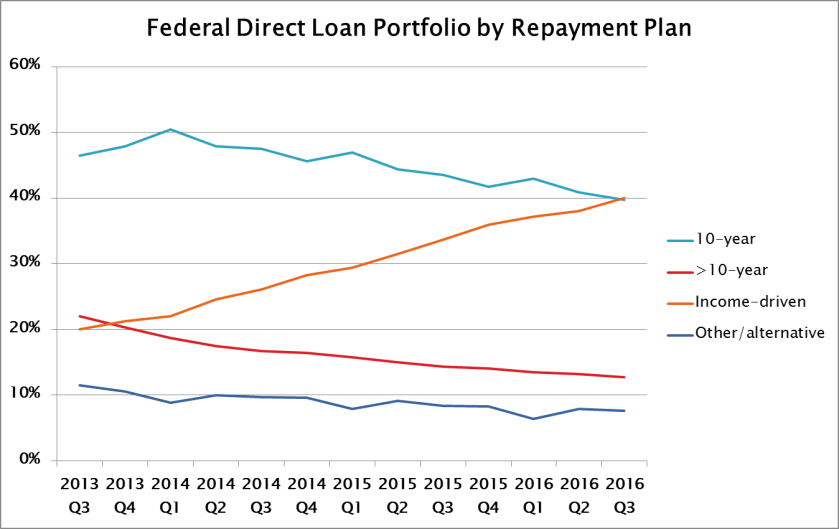
The U.S. Department of Education recently released new data (updated every three months) on the federal student loan portfolio showing the growth in income-driven plans. The chart below shows the percentage of dollars in the Direct Loan program that are in one of four broad categories: 10-year payment plans not tied to income, longer payment plans not tied to income, income-driven plans, and miscellaneous plans that don’t fit well in any of the above three categories.1

repay_aug16

Since 2013 (when repayment plan data first became available), the federal government’s holdings in the Direct Loan program have risen from $361 billion to $673 billion. The amount of loans in the standard ten-year repayment plan rose from $168 billion to $267 billion during this time, but the amount in income-driven plans rose from $72 billion to $269 billion in just three years. Income-driven plans now make up 40.0% of all Direct Loan dollars, while 39.7% of dollars are now in ten-year plans.

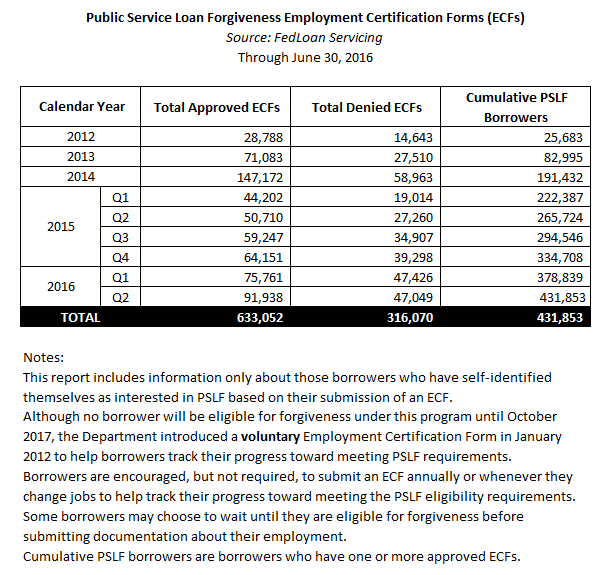
The Department of Education also released data for the first time on the number of students seeking employment certification in the Public Service Loan Forgiveness (PSLF) program, which will allow students working in approved fields to make ten years of payments instead of 20-25 years under other income-driven plans. While students aren’t officially in PSLF until they complete ten years of payments (the first students will do so in October 2017), this is an interesting measure of potential interest in PSLF. The below figure (from Federal Student Aid) shows the number of students who have submitted employment certification forms in possible preparation for receiving PSLF.

ecf_aug16

Notably, about one-third of all requests have been denied to this date, suggesting that quite a few students will get an unpleasant surprise when they go apply for PSLF in the next few years. But at least 430,000 students look to be on track for PSLF at this point—a number that is likely a significant understatement of the number of applications that the federal government will receive.


1 The Direct Loan program represents about 90% of all loans held by the federal government. The other 10% are in the older Federal Family Education Loan (FFEL) program, which has not disbursed new loans in years but has about one-third of its loan dollars in income-based plans. I excluded FFEL here because repayment plan data are only available for 2016.

On Student Loan Debt and Negative Wealth

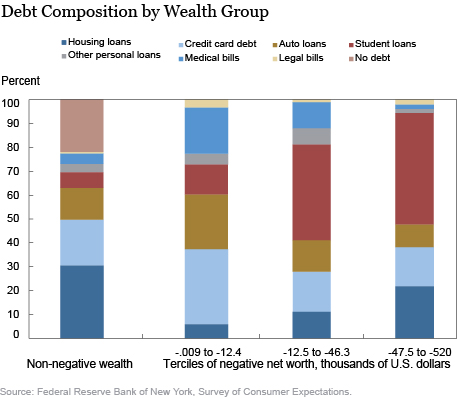
A recent analysis by economists at the Federal Reserve Bank of New York looked at the approximately 14% of American households that had negative wealth in 2015 and pointed out student loan debt as a key driver of negative wealth. As a key figure from the report (which is reprinted below) shows, student loan debt is responsible for between 40% and 50% of total negative wealth among households with a net worth of below -$12,500.

nyfed

This isn’t a tremendously surprising finding, although it’s always helpful to document something intuitive with actual data (although self-reported data always come with caveats). Student loans are one of the few types of debt aside from medical or legal bills that can be taken on in large amounts without having outstanding credit or collateral. Credit card debt is another way to take on debt, but most people with negative wealth won’t be able to access large lines of credit this way. It’s also possible to be underwater on a house (by owing more than its current value), but this affects a relatively small percentage of households.

The authors of the analysis then wrote the following about the implications of student loan debt:

“It is likely that the steady growth in student debt and borrowing, combined with the very slow rate of student loan repayment we have documented elsewhere, has materially contributed and will continue to contribute to negative household wealth and wealth inequality.”

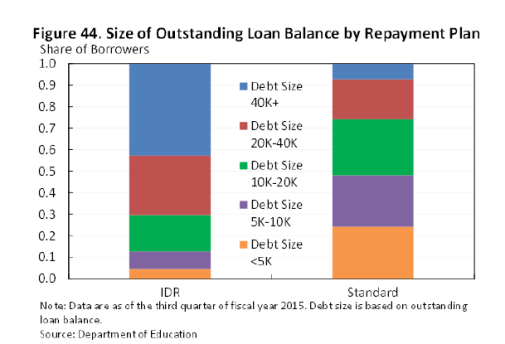
As I told Inside Higher Ed in their summary of the analysis, I only partially agree with that assessment. The challenge with this analysis is that it combines students who completed and did not complete a degree (likely due to sample size issues, as the dataset includes questions about educational attainment). As the authors note, households with a bachelor’s degree or higher and negative net worth tend to have a young head of household. For example, my household is just now leaving negative net worth territory, five years after our head of household completed law school.1 Paying off student loan debt is difficult, but the rapid growth in takeup of income-driven repayment plans among high-debt individuals (as shown in this recent White House report and in the chart below) has the potential to reduce this burden.

cea

I’m far more concerned about the implications for wealth inequality among students who did not complete a degree and are unaware of income-driven repayment options. Although there are positive economic returns on average for students who attend college but do not graduate, they are far smaller than students who finish. A better measure of wealth inequality would look at how wealth progresses over a ten-year window after a student leaves college. If he or she is able to repay loans and build assets, the picture is far less bleak than if a student still has negative wealth due to student loans and other types of debt.

———————————————————————————————————

1 In 2016, the term “head of household” is outdated. In households where both adults work, it’s far from clear who should be the head and who isn’t. It would be better to know the highest educational attainment of either of the adults.

The U.S. Dept. of Education Should Continue to Collect Benefits Costs by Functional Expense

This is a guest post by my colleague and collaborator Braden Hosch, who is the Assistant Vice President for Institutional Research, Planning & Effectiveness at Stony Brook University. He has served in previous positions as the chief academic officer for the Connecticut Department of Education and the chief policy and research officer for the Connecticut Board of Regents for Higher Education. He has published about higher education benchmarking, and has taught about how to use IPEDS data for benchmarking, including the IPEDS Finance Survey. Email: Braden.Hosch@stonybrook.edu | Twitter: @BradenHosch

Higher education finance is notoriously opaque. College students do not realize they are not paying the same rates as the student sitting next to them in class. Colleges and universities struggle to determine direct and indirect costs of the services they provide. And policymakers (sometimes even the institutions themselves) find it difficult to understand how various revenue sources flow into institutions and how these monies are spent.

All of these factors likely contribute to marked increases in the expense of delivering higher education and point toward a need for more information about how money flows through colleges and universities. But quite unfortunately proposed changes to eliminate detail collected in the IPEDS Finance Survey about benefits costs will make it more difficult to analyze how institutions spend the resources entrusted to them. The National Center for Education Statistics should modify its data collection plan to retain breakouts for benefits costs in addition to salary costs for all functional expense categories. If you’re reading this blog, you can submit comments on or before July 25, 2016 telling them to do just that.

Background

Currently, colleges and universities participating in Title IV student financial aid programs must report to the U.S. Department of Education through the Integrated Postsecondary Education Data System (IPEDS) how they spend money in functional areas such as instruction, student services, institutional support, research, etc. and separate this spending into how much is spent on salaries, benefits, and other expenses, with allocations for depreciation, operations and maintenance, and interest charges. This matrix looks something like this, with minor differences for public and private institutions:
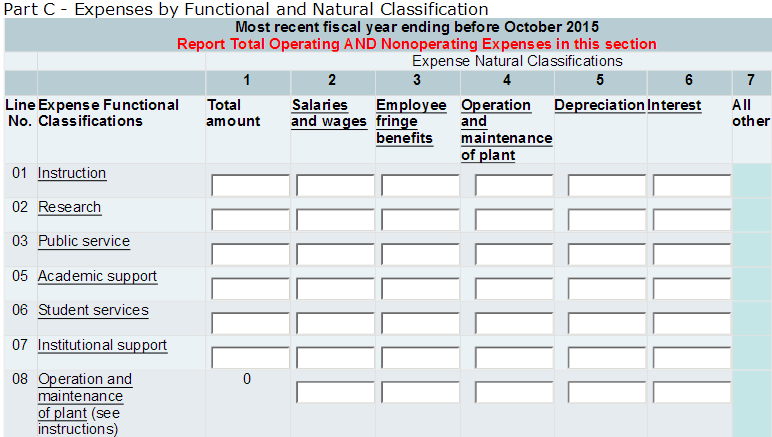
hosch_fig1

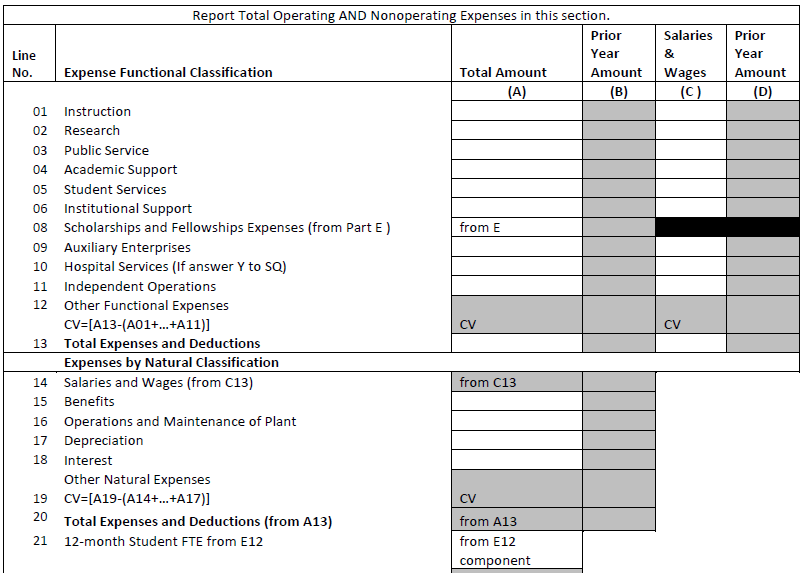
The proposed changes, solely in the name of reducing institutional reporting burden, will significantly scale back detail by requiring institutions to report only total expenses by function and total expenses by natural classification, but will not provide the detail of how these areas intersect:
hosch_fig2

Elimination of the allocations for depreciation, interest, and operations & maintenance is a good plan because institutions do not use a consistent method to allocate these costs across functional areas. But elimination of reporting actual benefits costs for each area is problematic.

To be clear, under the proposed changes, institutions must still, capture, maintain, and summarize these data (which is where most effort lies); they are simply saved the burden of creating a pivot table and several fields of data entry.

Why does this matter?

For one thing, the Society for Human Resource Management 2016 survey shows that benefits costs have increased across all economic sectors over the past two decades. IPEDS would continue to collect total benefits costs, but without detail about the areas in which these costs are incurred, it will be impossible to determine in what areas these costs may be increasing more quickly. Thus, a valuable resource for benchmarking and diagnosis would be lost.

Additionally, without specific detail for benefits components of function expenses, the ability to control for uneven benefits costs will be lost; it would be impossible for instance to remove benefits costs from standard metrics like education and general costs or the Delta Cost Project’s education and related costs. Further, benefits costs neither are distributed uniformly across functions like instruction, research, and student services nor are distributed uniformly across sectors or jurisdictions. Thus, to understand how the money flows, at even a basic level, breaking out benefits and other expenses is critical.

Here are two quick examples.

Variation at the institution level

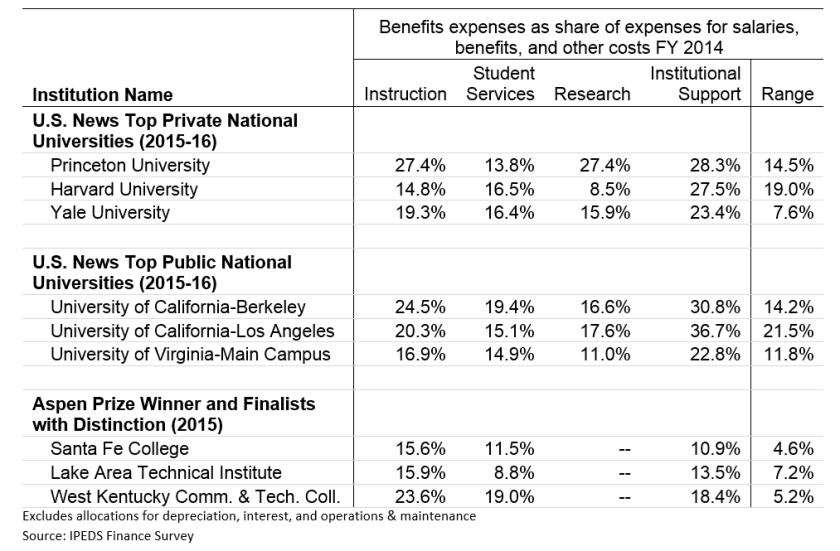
First, as a share of spending on instruction, benefits and other items, benefits expenses are widely variable by institution. I have picked just a few well-known institutions to make this point – it holds across almost all institutions. If spending on benefits were evenly distributed across functions, then the difference among these percentages should be zero, but in fact it’s much higher.
 hosch_fig3

Variation by state

Because benefits costs are currently reported separately across functions, it is possible to analyze how the benefits component of the Delta Cost Project education and related costs metric – spending on student related educational activities while setting aside auxiliary, hospital, and other non-core metrics. Overall, the Delta Cost Project also shows that benefits costs are rising, but a deeper look at the data also show wide variation by state, and in some states, this spending accounts for large amounts on a per student basis.

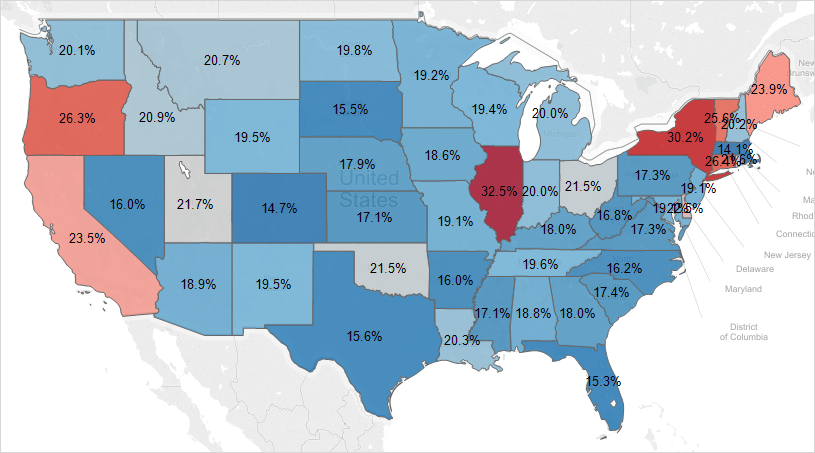
Among 4-year public universities in FY 2014, for instance, spending on benefits comprised 14.1% of E&R in Massachusetts, 20.2% in neighboring New Hampshire to the north, and 30.2% in neighboring New York to the west. The map below illustrates the extent of this variation.

Benefits as a percent of E&R spending, Public, 4-year institutions FY 2014
hosch_fig4

Excludes amounts allocated for depreciation and interest. Source Hosch (2016)

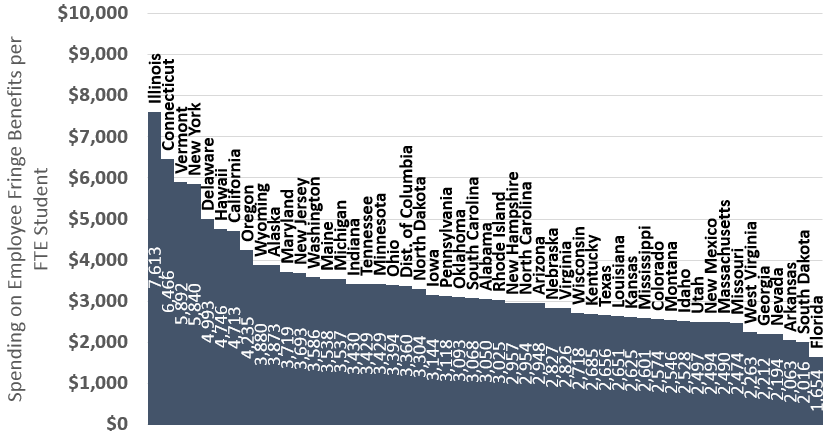
Likewise, on a per student (not per employee) basis these costs ranged from $1,654 per FTE student spent on E&R benefits in Florida, compared to $7,613 per FTE student spent on benefits in Illinois.

E&R benefits spending per FTE student, public 4-year institutions, FY 2014
hosch_fig5

Excludes amounts allocated for depreciation and interest. Source Hosch (2016)

Bottom line: variation is stark, important, and needs to be visible to understand it.

What would perhaps most difficult about not seeing benefits costs by functional area is that benefits expenses in the public sector are generally covered through states. States do not transfer this money to institutions but rather largely negotiate and administer benefits programs and their costs themselves. Even though institutions do not receive these resources, they show up on their expenses statements, and in instances like Illinois and Connecticut in the chart above, the large amount of benefits spending by institutions really reflects state activity to “catch up” on historically underfunded post-retirement benefits. To see what institutions really spend, the benefits costs generally need to be separated out from the analysis.

What you can do

Submit comments on these changes through regulations.gov. Here’s what you can tell NCES through the Federal Register:

  1. We need to know more about spending for colleges and universities, not less
  2. Reporting of functional expenses should retain a breakout for benefits costs, separate from salaries and other costs
  3. Burden to institutions to continue this reporting is minimal, since a) they report these costs now and b) the costs are actual and do not require complex allocation procedures, and c) they must maintain expense data to report total benefits costs.

Examining Trends in Pell Grant Award Data

The U.S. Department of Education recently released its annual report on the federal Pell Grant program, which provides detailed information about the program’s finances and who is receiving grants. The most recent report includes data from the 2014-15 academic year, and I summarize the data and trends over the last two decades in this post. (Very preliminary data on Pell receipt for the first three quarters of the 2015-16 academic year can be found in the Title IV program volume reports on the Office of Federal Student Aid’s website.)

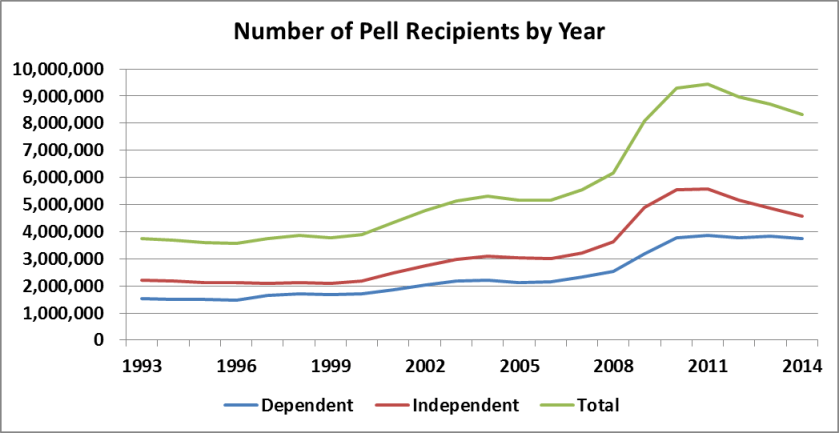
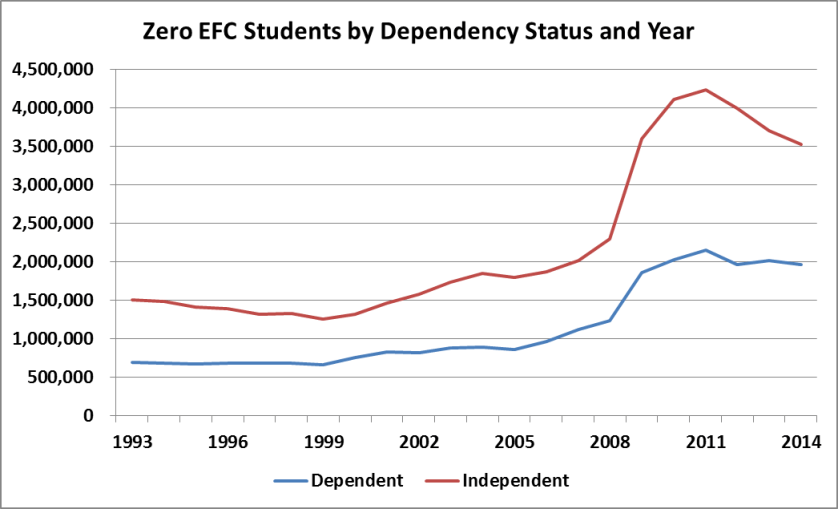
For the third year in a row, the number of Pell recipients fell, going from a peak of 9.44 million students in 2011-12 to 8.32 million in 2014-15 (a 12% decrease). This drop in recipients is almost entirely due to students who are considered independent for financial aid purposes (typically students who are at least 24 years of age, are married, or have a child). The number of independent Pell recipients fell by 18% in the last three years (to 4.56 million), while the number of dependent Pell recipients fell by just 2.7% (to 3.75 million), as shown in the chart below. However, independent students still make up the majority of Pell recipients, as they have every year since 1993.

pell2016_fig1

There has been an even larger drop in the number of students with zero expected family contribution, who automatically qualify for the maximum Pell Grant. (For more on these students, check out this article I wrote in the Journal of Student Financial Aid last year.) Nearly 900,000 fewer students received a zero EFC since 2011-12, with decreases of 9% among dependent students and 17% among independent students.

pell2016_fig2

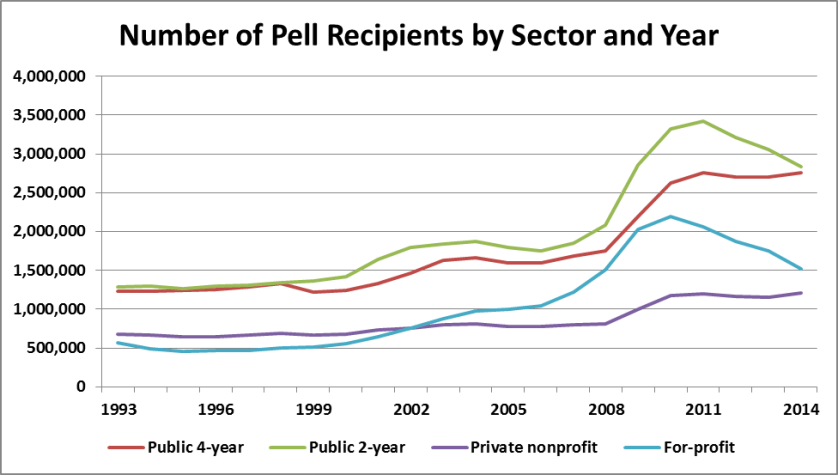
In the next chart, I show the number of students receiving Pell Grants by sector since 1993. The number of Pell recipients dropped by almost 225,000 students at community colleges and 230,000 students at for-profit colleges between 2013-14 and 2014-15, while Pell enrollment at both public four-year and private nonprofit colleges increased by about 55,000 students each. Since 2011-12, community college Pell enrollment is down by 17% and for-profit Pell enrollment is down 26%, while other sectors are basically flat. These trends fit well with economic conditions, as more vocationally-oriented colleges see enrollment spikes during recessions and sizable drops during better times (like today).

pell2016_fig3

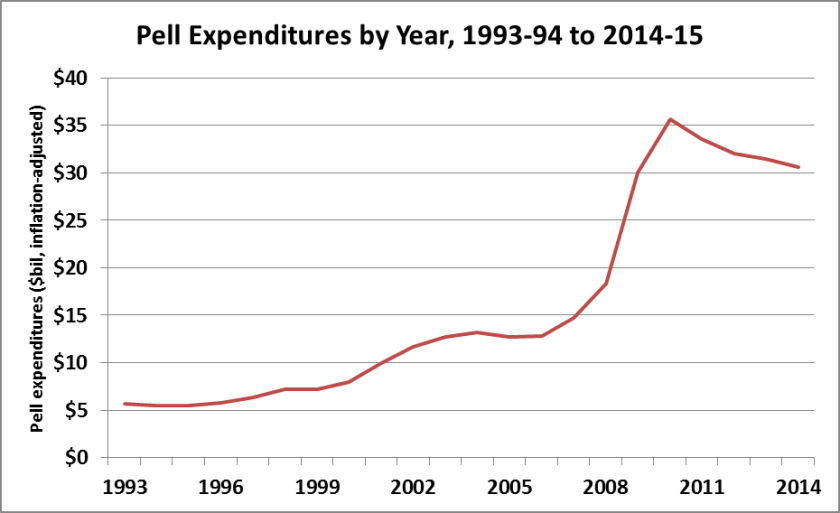
Expenditures for the Pell Grant program declined for a fourth consecutive year, going from $35.7 billion (in nominal dollars) in 2010-11 to $30.6 billion in 2014-15. However, in inflation-adjusted dollars, Pell spending has still more than doubled since 2007-08.

pell2016_fig4

The large decrease in Pell expenditures led to a $7.8 billion surplus in the Pell program going forward, but Congress has plans to spend part of that surplus. A U.S. Senate subcommittee approved bringing back year-round Pell Grants (an idea with strong bipartisan support that would allow students to get Pell Grants for more than two full-time semesters per year) as well as transferring some of the funding to the National Institutes of Health and K-12 education. But will Pell expenditures continue to drop? It’s possible if the economy continues to improve while parts of the for-profit college sector continue to collapse, but the trend toward a more economically diverse group of young adults will likely increase Pell enrollment in future years.

Which Colleges Benefit from Counting More Graduates?

The official graduation rate that colleges must report to the U.S. Department of Education has included only first-time, full-time students who graduate from that college within 150% of normal time (three years for a two-year college or six years for a four-year college). Although part-time and non-first-time students were included in the federal government’s Integrated Postsecondary Education Data System (IPEDS) collection for the first time this year, it will still be about another year or so before those data will be available to the public. (Russell Poulin at WICHE has a nice summary of what the new IPEDS outcome measure data will mean.)

In the meantime, the Student Achievement Measure (SAM)—a coalition of organizations primarily representing public colleges and funded by the Gates Foundation and Carnegie Corporation—has developed in response to calls for more complete tracking of student outcomes. SAM has launched a public relations campaign that has been quite visible in the higher education community using the hashtag #CountAllStudents to show the number of students who aren’t captured in the current graduation rate metric. (Barack Obama and Sarah Palin are two well-known examples.)

But what can be learned from a more complete picture of graduation rates? In this blog post, I examined SAM outcome data for 54 participating colleges in four states (California, Maryland, Missouri, and South Carolina) to see the extent to which graduation rates for first-time, full-time students at four-year universities changed by counting students who transferred and graduated elsewhere as a success, as well as looking at the percentage of students still enrolled after six years. I focused on first-time, full-time students here so I could compare the current graduation rate metrics to alternative metrics; completion rates for part-time students can be a topic for another day. The data can be downloaded here, and a summary is below.

Average graduation rate for first-time, full-time students at the same university within six years: 57%

Average graduation rate for first-time, full-time students anywhere within six years (SAM): 66%

Gain from SAM metric: 9%

Still enrolled anywhere, but no bachelor’s degree: 15%

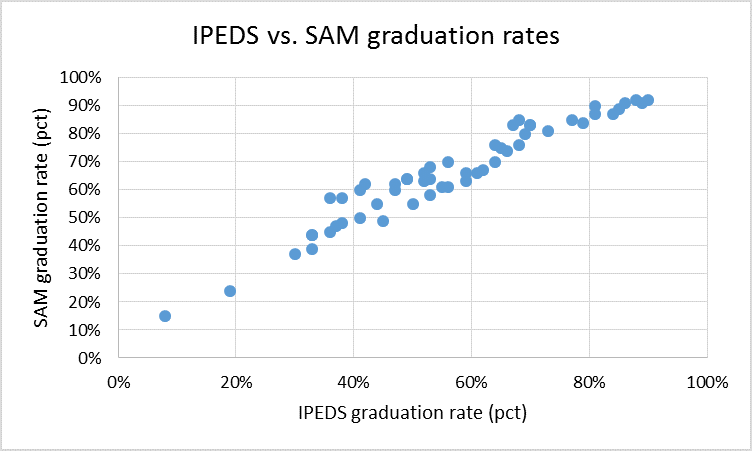
The first figure below shows the distribution of IPEDS and SAM graduation rates, and it shows that they are pretty strongly related. The correlation between the two graduation rates is 0.966, which is a nearly-perfect relationship.

ipeds_sam_fig1

But colleges with lower IPEDS graduation rates did tend to gain more from the SAM graduation rate than those with higher graduation rates, as shown below. Six colleges with IPDS graduation rates between 35% and 70% had at least 15% of students graduate from another college, including five of the six universities participating in SAM from South Carolina. On the other hand, UCLA (with a 90% graduation rate in IPEDS) gained just 2% from the SAM metric. This suggests that a more complete definition of a graduate will help to at least slightly narrow graduation rate gaps.

ipeds_sam_fig2

It is also stunning to see the percentage of students who were still enrolled in college after six years. While the average college in my sample had 15% of its first-time, full-time students still plugging away somewhere, most of the less-selective colleges with higher percentages of lower-income and minority students still had at least 20% of students still enrolled. The new IPEDS metrics will count students through eight years, which should give a better picture of completion rates. I’m excited to see those metrics come out in the future—and hopefully incorporate them in future versions of the Washington Monthly college rankings.

Which Colleges’ Students Use Income-Driven Repayment Plans? We Don’t Know

The Obama Administration has made expanding access to income-driven repayment (IDR) plans for federal student loans a key part of its higher education policy agenda. The U.S. Department of Education now offers four different IDR plans, all of which allow former students to tie their payments to their income instead of the traditional system of fixed monthly payments. The newest plan, Revised Pay as You Earn (REPAYE), allows millions of students with federal loans to pay 10% of their income above 150% of the federal poverty line—which can represent a significant decline in monthly payments for students with modest incomes relative to their debt burdens.

As IDR plans have become more generous, more students have signed up for these plans. In the third quarter of Fiscal Year 2013, only $72.3 billion in Direct Loans was tied to income-based plans while $247.3 billion was tied to a traditional payment plan. By the first quarter of Fiscal Year 2016, the amount of loans in IDR tripled to $232.5 billion, while the amount in traditional payment plans increased to $353.3 billion—meaning that a majority of additional Direct Loan debt was being repaid via income-driven plans. Data released by the White House show that about one-fifth of students are enrolled in IDR as of early 2016, double the rate of just two years ago.

Income-driven repayment plans likely benefit two different types of students. The first group of students includes those for whom college simply didn’t work out in terms of increasing their earnings potential. IDR is an important safety net for these students, as it helps to insure against the risk of high student loan payments relative to one’s income. Given that students with less than $5,000 in debt are nearly twice as likely to default on their loans than those with more than $100,000 in debt, the availability of IDR should help these students the most.

But a second group of students appears to be the more common users of income-driven plans—graduate students in relatively low-wage fields, particularly those who qualify for the Public Service Loan Forgiveness (PSLF) program that limits payments to a 10-year period instead of 20-25 years for those working for a qualifying nonprofit or public-sector organization. Jason Delisle of New America (who is moving to the American Enterprise Institute soon) has repeatedly raised concerns about the fiscal impacts of IDR for graduate students, noting that the typical borrower in PSLF has between $60,000 and $70,000 in debt and graduate programs have incentives to further raise tuition as the typical student won’t pay back the additional dollars borrowed. Georgetown Law School actually did this by creating a Loan Repayment Assistance Program that covered the loan payments of students who worked in public service and made less than $75,000 per year.

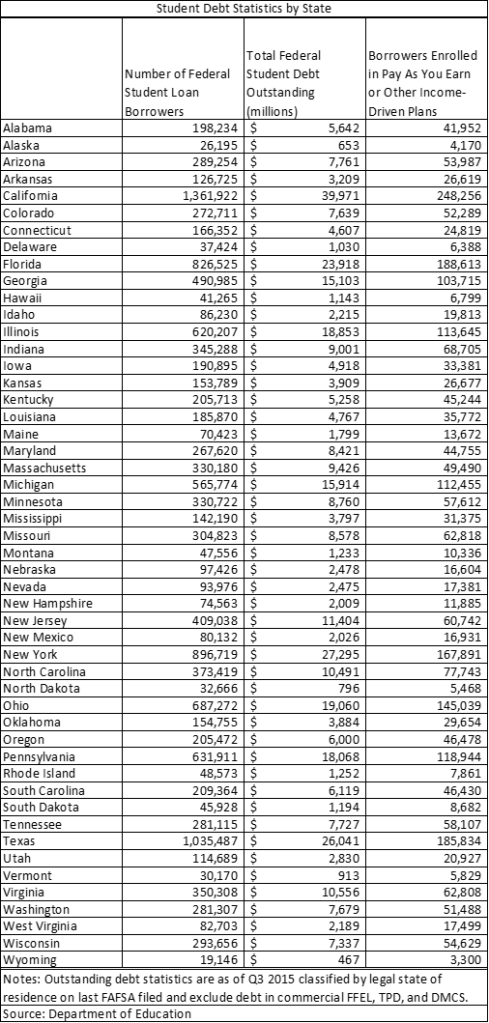
Given the rising cost of IDR programs, it would be useful to know which colleges encourage their students to enroll in income-driven plans or provide assistance to help navigate an often-complex process to annually certify their income. And it would be even more helpful to get this information broken down for undergraduate and graduate students, as the types of students enrolled in IDR likely differ across these two groups. Yet, as with many other important issues (such as graduation rates for Pell Grant recipients or the default rates on PLUS loans), this information is not yet available to the taxpaying public. The White House did release the following chart last week of the number of borrowers in IDR by state, but this chart (released as a picture instead of a spreadsheet!) doesn’t get at the behaviors of individual colleges while also excluding Washington, DC:

state_idr

The Department of Education’s Office of Federal Student Aid has the ability to release data on which colleges’ students use income-based repayment plans and whether those students are undergraduates with low earnings who are hard on their luck or grad students with lots of debt but incomes at or above the national average. Releasing these data would help inform conversations about the value of IDR plans and what colleges and loan servicers can do to help enroll the neediest students in these programs.

(Still) Don’t Dismiss Performance Funding Research

I like the idea of funding public colleges and universities based in part on their former students’ outcomes—and I’m far from the only one. Something in the ballpark of three dozen states have adopted some sort of a performance-based funding (PBF) system, with more states currently discussing the program. Given that many states currently fund colleges based on a combination of enrollment levels and historical allocations that can be woefully out-of-date, tying some funding to outcomes has an intuitive appeal.

However, as a researcher of accountability policies in higher education, I am concerned that some colleges may be responding to PBF in unintended ways. At this point, as I briefly summarized in a recent piece at The Conversation, there is evidence that PBF may adversely affect access to college for moderately prepared students as well as the types of postsecondary credentials awarded. My newest contribution was a recently published article in the Journal of Education Finance that found both two-year and four-year colleges subject to PBF saw less Pell revenue than other colleges not subject to PBF.

Since that article finished the peer review and copy editing processes and was posted online two weeks ago, I’ve been expecting a response from one of the largest organizations advocating for PBF. HCM Strategists, a DC-based advocacy group that is quite effective in lobbying and policy development, has traditionally been a strong supporter of PBF. (Disclaimer: I’ve gotten funding from them for a project on a different topic in the past.) In 2013, an HCM director responded to a high-quality paper by David Tandberg and Nick Hillman (that was later published in JEF) by writing an Inside Higher Ed piece called “Don’t Dismiss Performance Funding.” In this piece, they call the research “flawed” and “simplistic,” neither of which are particularly true. I wrote a blog post called “Don’t Dismiss Performance Funding Research,” in which I wasn’t too pleased with their response.

Today, HCM director Martha Snyder has a much more nuanced IHE essay on my and Luke’s work entitled “Jumping to Conclusions,” saying that our work should not be used “to draw any meaningful conclusions” on PBF. Snyder discusses what she perceives as some of the limitations of our work. The most notable one is that multiple types of PBF policies are lumped together in the analyses. That is necessary due to data limitations—there is no comprehensive archive of the nuances of PBF plans prior to the early 2010s. However, general trends in PBF policies across states are partially captured by the year fixed effects in the regression (standard practice in panel analyses), which also help to account for these factors.

Snyder also suggests that some states have been encouraging students to enroll in community colleges, which is definitely the case (although somewhat less so prior to 2012-13, the last year of our analysis due to the pace at which new data become available). If this were true, it would explain decreases in per-FTE Pell revenue at four-year colleges, but also increase Pell revenues at two-year colleges. Instead, we saw nearly identical negative point estimates, which raise further cause for concern. (Could this affect for-profit enrollment? I can’t really tell with federal data, but a state-level analysis here would be great.)

I appreciate HCM’s work in helping states implement more modern funding programs, but it is imperative that influential policy organizations work with the research community before drawing any meaningful conclusions about the potential unintended consequences of PBF—especially as the stakes become higher for students and colleges alike. The small, but growing, body of literature on colleges’ responses to PBF suggests that collaboration among interested parties would be far more productive than attempting to dismiss findings from peer-reviewed research that suggest caution may be in order. I’m happy to do what I can to summarize the literature on unintended consequences while working to move forward policy discussions on future versions of PBF.

Understanding Financial Responsibility Scores for Private Colleges

This post originally appeared on the Brookings Institution’s Brown Center Chalkboard blog.

The stories of financially struggling private colleges, both nonprofit and for-profit, have been told in many news articles. Small private nonprofit colleges are increasing tuition discount rates in an effort to attract a shrinking pool of traditional-age students in many parts of the country, while credit rating agency Moody’s expects the number of private nonprofit college closings to triple to about 15 per year by next year. Meanwhile, the for-profit sector has seen large enrollment decreases in the last few years amid the collapse of Corinthian Colleges and the University of Phoenix’s 50 percent drop in enrollment since 2010.

In an effort to identify financially struggling colleges and protect federal investments in student financial aid, Congress requires the U.S. Department of Education to calculate financial responsibility composite scores that are designed to measure a college’s overall financial strength based on metrics of liquidity, ability to borrow additional funds if needed, and net income. Private nonprofit and for-profit colleges are required to submit financial data each year, while public colleges are excluded under the assumption that state funding makes them unlikely to become insolvent.

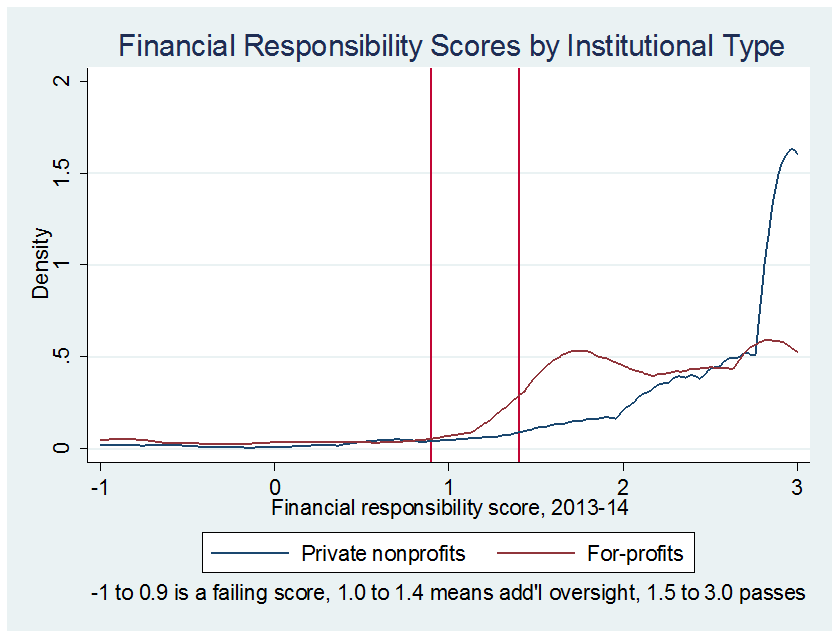
Though not commonly known, these financial responsibility scores have important consequences for private colleges.  Scores can range between -1.0 and 3.0, with colleges scoring at or above 1.5 being considered financially responsible and are allowed to access federal funds. Colleges scoring between 1.0 and 1.4 can access financial aid dollars, but are subject to additional Department of Education oversight of their financial aid programs. Finally, colleges scoring 0.9 or below are not considered financially responsible and must submit a letter of credit of at least 10 percent of federal student aid from the previous year and be subject to additional oversight to get access to funds. The Department of Education can also determine that a college does not meet “initial eligibility requirements due to a failing composite score” and assign it a failing grade without releasing a score to the public. In this case, a college will be immediately subject to heightened cash monitoring rules that delay the federal government’s disbursement of financial aid dollars to colleges. However, private nonprofit colleges dispute the validity of the formula, claiming it is inaccurate and does not meet current accounting standards.

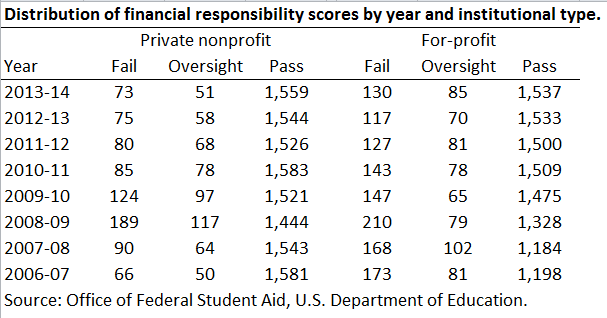
I first examined the distribution of financial responsibility scores among the 3,435 institutions (1,683 private nonprofit and 1,752 for-profit) with scores in the 2013-14 academic year, using data released to the public earlier this month. As illustrated in the figure below, only a small percentage of colleges that were assigned a score did not pass the test. In 2013-14, 203 colleges (73 nonprofit and 130 for-profit) received a failing score and an additional 136 (51 nonprofit and 85 for-profit) were in the oversight zone. Most of the colleges with failing scores are obscure institutions, such as the Champion Institute of Cosmetology in California and The Chicago School for Piano Technology. However, a few of these institutions, such as for-profit colleges Charleston School of Law, ITT Technical Institute, and Vatterott Colleges as well as nonprofit colleges Erskine College in South Carolina, Everglades University in Florida (a former for-profit) and Finlandia University in Michigan are at least somewhat better-known.

finscore_fig1

I then examined trends in financial responsibility scores since when scores were first released to the public in the 2006-07 academic year. The first finding to note in the below table is that the number of nonprofit colleges that did not pass the financial responsibility test nearly doubled between 2007-08 and 2008-09, including more than one in six institutions. Much of this increase appears to be due to the collapse in endowment values, as even a decline in a rather small endowment would affect a college’s score through reducing net income. During the same period, there was only a slight increase in the number of for-profit colleges facing additional oversight.

finscore_fig2

The second interesting trend is that in spite of concerns about the viability of small colleges with high tuition prices since the Great Recession, the number of colleges that either received a failing score or faced additional oversight has slowly declined since 2010-11. Only 12 percent of for-profits and seven percent of nonprofits failed in 2013-14, reflecting a general stabilizing trend for struggling private institutions.  Although there are certainly valid concerns about how these scores are calculated, most colleges with failing scores and some others facing additional oversight are likely on shaky financial footing. Many of these colleges with failing scores—particularly for several years in a row—will be forced to consider merging with another institution or closing their doors entirely in the near future. Other colleges closer to the passing threshold may be facing tight budgets for years to come, but their short-term viability is generally secure.

It is unlikely that a substantial number of students and families know that financial responsibility scores even exist, let alone use them in their college choice decisions. However, these scores do provide some potential insights into the financial stability of a college and could potentially be included in the new College Scorecard tool. Students who are considering attending a college that repeatedly receives a failing score should ask tough questions of college officials about whether they will be financially solvent several years from now. Policymakers should use these scores as a way to identify financially struggling institutions and provide support for ones with solid academic outcomes, while also asking tough questions about the viability of cash-strapped colleges that academically underperform similar colleges.

What the Leading Republican Presidential Candidates Are Saying About College Affordability

With cumulative student loan debt exceeding $1.2 trillion and the average net price of college attendance continuing to rise, college affordability has become an important issue in the 2016 presidential election. Most of the attention on this topic has been in the Democratic primary, in which Vermont Senator Bernie Sanders and former Secretary of State Hillary Clinton both have ambitious plans to make public colleges either tuition-free (Sanders) or debt-free (Clinton) that have played a prominent role in their campaigns.

College affordability has played a much smaller role in the Republican primary to this point, with topics such as foreign policy and immigration getting far more attention from the candidates. Yet the rising price of college is likely to be an important issue in the general election, particularly among younger adults who tend to lean toward supporting Democratic candidates. Here, I examine the leading Republican candidates’ positions on how to make higher education more affordable for students and their families.

Donald Trump

The billionaire businessman and political novice has gained attention recently for his foray into for-profit higher education through the Trump Entrepreneur Initiative, which was previously known as Trump University before New York’s attorney general sued to stop Trump from using the term “university.” Trump is also facing lawsuits from former students who claimed that they got no value from their investment of up to $35,000 in real estate seminars.

In multiple interviews, Trump has stated his intention to either close or substantially downsize the U.S. Department of Education, although much of his rationale appears to be due to opposition to the Common Core standards at the K-12 level. In his only statement regarding higher education affordability, Trump has criticized the Department of Education for making a profit on the federal student loan program. Trump shares this view with many Democratic legislators, even though government agencies have different opinions about the profitability of student loans.

Sen. Marco Rubio

The first-term Florida senator has significant experience with higher education, having been an adjunct professor of political science at Florida International University between 2008 and 2015. In the Senate, Rubio has co-sponsored bipartisan legislation that would make income-based repayment the default option for federal student loans and would require colleges to report additional data on student outcomes. He has also co-sponsored a bipartisan bill that would open the federal financial aid program to alternative education providers that can meet certain outcome standards and gain accreditation, although he has also faced criticism for his defense of for-profit colleges whose access to federal funds has been threatened.

Rubio has also supported ideas that are likely to appeal to Republican primary voters but may not be as popular with independent-minded voters in a general election. Like Trump, Rubio has also called for the elimination of the Department of Education. Rubio has noted that some programs currently administered by the federal government should continue (such as the federal student loan program), but they could be absorbed by the Department of the Treasury or other agencies. He has sponsored legislation in the Senate to allow students to use private income share agreements, which function similarly to private loans with income-based repayment, to finance their education. This idea has been criticized as a form of indentured servitude, even though federal loans function in similar ways.

Sen. Ted Cruz

The first-term Texas senator has said relatively little about college affordability, other than noting that he just recently paid off his $100,000 in student loan debt. Like the other GOP candidates, he has called for the vast majority of the Department of Education to be eliminated. Cruz would appoint an Education Secretary whose sole goal would be to determine which programs should remain and give most funding to the states via block grants. In 2012, Cruz indicated that he would keep federal student aid funds in the federal budget, but transfer funding and authority to the states.

As Democrats will certainly keep at least 40 seats in the U.S. Senate (the minimum needed to sustain a filibuster to block legislation) and may gain a majority in this fall’s election, it doesn’t appear that the Department of Education will go away anytime soon. But if any of these three Republican candidates are elected, their actions on affordability—and the implications for both students and taxpayers—are likely to be quite different than what a Clinton or Sanders administration will be proposing.